
Local Cuisines
1. SINALAU BAKAS

Sinalau Bakas or Smoked Wild Boar is one of Sabah's most popular native dishes, an iconic food of Kadazandusun people, the largest ethnic group in North Borneo.Touted as the must-have “pusas” (beer time snack), Sinalau Bakas literally means Smoked Wild Boar. It is usually located at the roadside along the winding roads towards Kinabalu Park, Kundasang. You can take a break from your long drive up towards the majestic Mount Kinabalu and sample this local favourite snack. Squeeze some zesty lime on the wild meat for some extra flavour.
2. TUARAN MEE

Tuaran Mee is one of the noodles representing Sabah state.Yellow egg noodles that are boiled and then fried with your choice of topping. The Beef Lihing Tuaran Mee is something speciaL. Chunks of beef marinated in Lihing (local sweet rice wine) and fried with vegetables, and egg. It is typically eaten in the morning before a fun day out.
3. FISH NOODLES

Depending on your preference, there are countless types of fish noodles available all around Sabah. For those who love something savoury for breakfast, try looking for a fish noodle shop that serves a clear fish broth cooked with preserved vegetables. Opt for Laksa if you like a bit of spice from chilli oil and creamy coconut milk in your meal. One may also settle for the typical local breakfast of Kon Lou Mee (dry tossed noodles in soy sauce) and a bowl of fish slices, prawns, and dumplings.
4. Kuih Cincin and Kuih Pinjaram
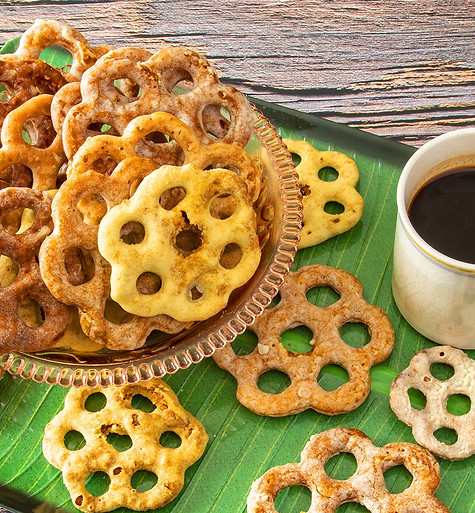
Kuih cincin literally translates to “ring cake”, but it’s more suitable to be categorized as a cookie / biscuit. The distinct shape of kuih cincin is its resemblance with the round outline of a flower drawing. The cookie has a pleasing sugary and coconut aroma.

Kuih Pinjaram is a teatime staple made of coconut milk, sugar and rice flour that looks like a fried UFO. It is a sweet and round cake with a soft and chewy texture. Its edge is crispy, but fluffy and springy toward the middle.
5. AMBUYAT AND PINASAKAN SADA
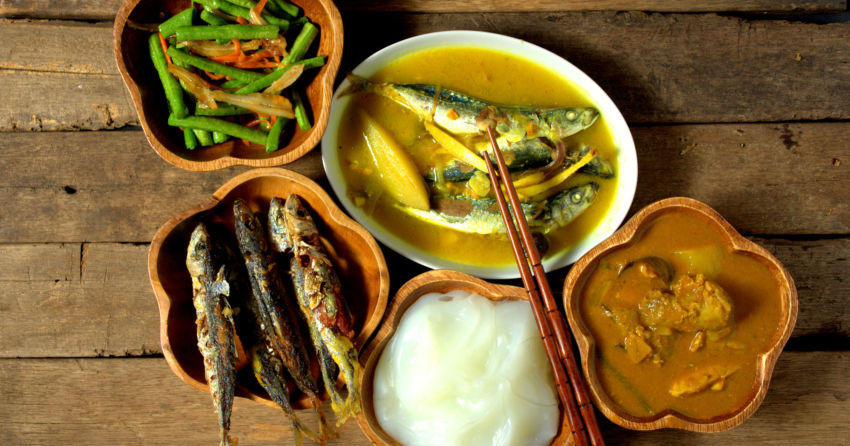
Derived from the trunk of the Sage Palm, this starchy delicacy is eaten with prongs, or chopsticks! Twirling the gooey substance around the prongs, it is then dipped into Pinasakan which is a Kadazandusun stew made of the Basung fish broiled with Tumeric, Takab Akob (wild fruit) and Bambangan (commonly known as a wild mango).
6. GRILLED FRESH SEAFOOD

Sabah is known for its plenty and affordable seafood, be prepared to be spoiled for choice when it comes to fresh seafood! There are countless seafood restaurants in Sabah. You can take a walk along the Waterfront Kota Kinabalu towards the Handicraft/Fish Market during sunset and enjoy choosing your choice of seafood at the Seaside Night Market.
7. BOSOU

Bosou is the Kadazan-Dusun term for a traditional recipe of tangy fermented meat. Smoked and pulverised buah keluak (nuts from the Kepayang tree which grows in Malaysia's mangrove swamplands), or pangi is a key ingredient and acts as a preservative. Combined with rice, salt and fresh meat or fish, the mixture is then placed into a sealed jar or container for fermentation. Contemporary variants for bosou add bananas and pineapples to the mixture.
8. NASI KOMBOS

A traditional Malaysian rice dish originating from the Lotud community in Sabah. The dish is made with a combination of glutinous rice, coconut cream and water, salt, and grated coconut flesh. The glutinous rice is cooked in coconut water. Once cooked, the rice is mixed with grated coconut flesh and the mixture is seasoned with salt to taste. Nasi kombos is traditionally served in a coconut shell and enjoyed warm.
9. TUHAU

A type of wild ginger, specifically the stems of the same plant popularly served as a relish by the Kadazan-Dusun community. The stems are typically chopped up and served fresh with lime juice, or mixed with local chives and chilli peppers then cured with salt and vinegar. A more recent recipe called serunding tuhau involves slicing tuhau stems into thin floss-like shreds, which is then sauteed until it becomes golden and crisp. It has a distinctive scent which is said to have a polarising effect even among indigenous Sabahans
10. NGIU CHAP

Ngiu Chap literally means “Mixed Beef”, which is a mix of beef and its organs such as stew meat, meat ball, tendon, liver, heart, tripe, intestine, tongue, spleen and omasum, usually served with noodles in thick beef broth.